
Bulova clocks, renowned for their enduring quality and aesthetic appeal, have graced homes and offices for generations. This exploration delves into the rich history of Bulova timepieces, from their early designs to modern interpretations. We’ll examine their evolution, design elements, and market presence, shedding light on the factors that have contributed to their enduring popularity.
This detailed analysis spans the history of Bulova clocks, from their pioneering designs to their current models. We will trace their evolution through various eras, exploring the key design elements that have defined the brand and the impact on the broader watchmaking industry.
Bulova Clocks
Bulova, a name synonymous with precision and style, has a rich history in the world of timekeeping. From its early days as a purveyor of high-quality watches, the company expanded its horizons to encompass clocks, reflecting a broader commitment to the art and science of measuring time. This evolution has seen Bulova clocks become integral parts of homes and public spaces, often reflecting the design sensibilities of their era.The company’s commitment to innovation, coupled with its understanding of consumer preferences, has shaped the distinctive character of its clocks.
From intricate designs to the use of sophisticated materials, Bulova’s clocks have consistently sought to provide both functionality and aesthetic appeal. This journey through time, from early mechanical marvels to contemporary designs, reveals a fascinating narrative of innovation and enduring quality.
Chronological Overview of Bulova’s Clockmaking
Bulova’s foray into clockmaking was not a sudden leap but rather a gradual expansion from its watchmaking roots. The company’s early clocks often mirrored the elegant and sophisticated designs of their watch collections. The 1930s and 1940s saw the rise of Art Deco influences, adding a distinctive flair to Bulova’s clock designs. Later, the company embraced mid-century modern styles, showcasing a preference for clean lines and functional aesthetics.
The company’s adaptability to changing design trends has been a key factor in its success.
Design Styles and Aesthetics
Bulova clocks have showcased a wide spectrum of design styles. Early models often reflected the refined elegance of the Art Deco era, with intricate detailing and geometric patterns. Mid-century modern Bulova clocks emphasized simplicity and functionality, featuring clean lines and minimalist forms. Subsequent periods saw Bulova experiment with contemporary designs, incorporating materials like stainless steel and incorporating modern technology into their clock mechanisms.
Examples of Famous Bulova Clock Designs
The “Grandfather Clock” collection exemplifies Bulova’s commitment to traditional craftsmanship. The company’s mastery of precision engineering is evident in their intricate mechanical movements, offering a testament to the enduring appeal of classic designs. The distinctive “Empire” series showcased the incorporation of more modern materials, including the use of polished wood and chrome accents. These designs demonstrated the company’s ability to adapt classic designs to modern sensibilities, retaining the appeal of the past while innovating for the present.
Materials and Manufacturing Processes
The materials used in Bulova clocks have evolved significantly. Early models often employed traditional materials like wood and brass, reflecting the craftsmanship of the time. Later, the company integrated more contemporary materials like stainless steel and glass, reflecting the company’s willingness to incorporate new technologies. Manufacturing processes have also advanced, allowing for greater precision and efficiency.
Timeline of Significant Events
| Year | Event |
|---|---|
| 1930s | Bulova clocks begin incorporating Art Deco design elements. |
| 1950s | Bulova introduces mid-century modern designs. |
| 1970s | Bulova expands its use of contemporary materials and technologies. |
| 1990s | Bulova begins focusing on more contemporary and minimalist designs. |
| 2000s-present | Bulova continues to innovate and expand its product line. |
This timeline highlights key milestones in Bulova’s clockmaking history, demonstrating the company’s consistent pursuit of innovation and design excellence.
Bulova Clocks
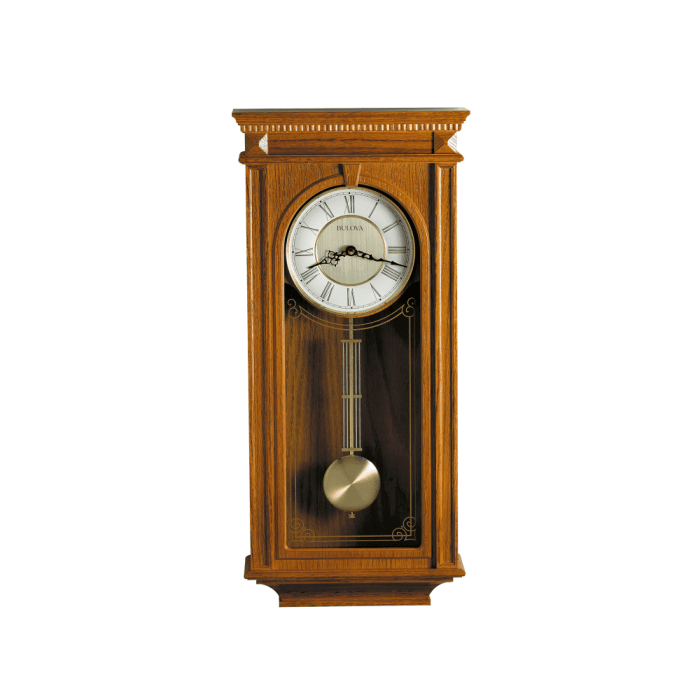
Bulova, a venerable name in horology, offers a diverse collection of clocks, spanning various styles and functionalities. From meticulously crafted wall clocks to elegant mantelpieces, Bulova’s timekeeping instruments cater to diverse aesthetic preferences and practical needs. Their enduring appeal lies in the blend of classic design and contemporary innovation.Bulova clocks maintain a strong presence in the market due to their meticulous craftsmanship, reputable brand history, and wide array of models.
This variety allows individuals to find a style that resonates with their tastes and home décor.
Popular and Sought-After Models
Bulova’s extensive catalog includes a range of models, each with its unique charm. Some models consistently garner popularity and demand due to their design elements and historical significance. These popular models often reflect a balance between classic aesthetics and contemporary features.
Types of Bulova Clocks
Bulova offers a variety of clock types, catering to different placement and aesthetic preferences within a home.
- Wall Clocks: These are frequently used for timekeeping in living spaces, bedrooms, and hallways, providing a convenient and decorative touch to any room.
- Mantel Clocks: Often characterized by their elegant design and intricate details, mantel clocks are ideal for display on mantels or other prominent locations in the home. Their presence adds a touch of sophistication and timeless appeal.
- Table Clocks: These clocks, frequently featuring a compact design, are suitable for use on desks, side tables, or other areas where a smaller timekeeping instrument is desired.
- Desk Clocks: These are typically smaller, more compact clocks, specifically designed for desks, offering a precise and functional timekeeping element.
Comparison of Models
Bulova’s clock models vary significantly in features, functionalities, and design elements.
| Model | Features | Functionality | Design |
|---|---|---|---|
| Accutron | Precise quartz movement | Highly accurate timekeeping | Modern, minimalist |
| Curved-face | Aesthetically pleasing curve | Standard timekeeping | Unique, artistic |
| Pocket Watch Style | Elegant detailing | Precise timekeeping | Classic, refined |
Analog vs. Digital Clocks
Bulova offers both analog and digital clocks. Analog clocks use hands to display the time, while digital clocks use numbers to show the time. The choice between these two types depends on personal preference, design aesthetics, and the desired level of visual complexity.
Special Editions and Limited Editions
Bulova occasionally releases special editions and limited-edition clocks, often designed to commemorate events, collaborations, or themes. These editions usually feature unique designs, materials, or features, making them highly collectible for enthusiasts.
Bulova Clocks
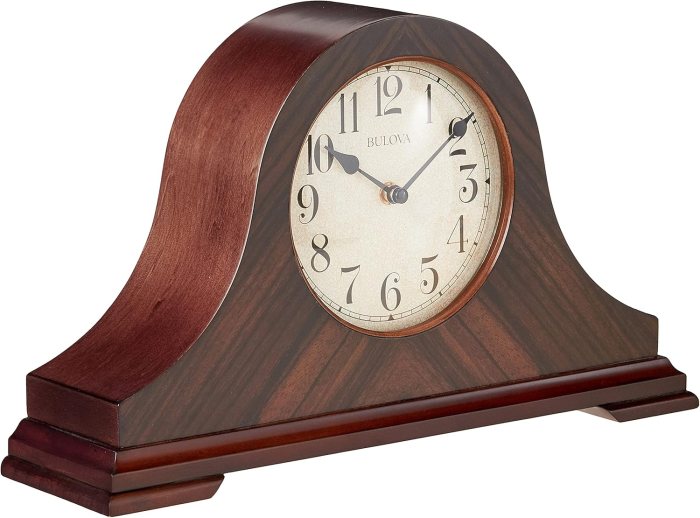
Bulova, a venerable name in horology, has a rich history intertwined with the evolution of timekeeping. From its early days crafting precision movements to its modern designs, Bulova clocks have consistently demonstrated a commitment to quality and innovation. Their enduring appeal lies in a thoughtful blend of classic elegance and contemporary flair, resonating with collectors and timepiece enthusiasts alike.Bulova clocks exhibit a distinct design philosophy, reflecting not just the passage of time but also the changing aesthetics and trends of each era.
This is evident in their varied styles, materials, and functionalities, creating a diverse range of options for discerning consumers.
Design Elements
Bulova clocks are characterized by a range of distinctive design elements that differentiate them from other brands. These elements include intricate detailing, often featuring delicate engravings or sculpted patterns. The use of premium materials, from polished stainless steel to intricately patterned dials, contributes to the overall aesthetic appeal and enhances the perceived value. Furthermore, Bulova’s commitment to meticulous craftsmanship is apparent in the attention to detail, from the precise alignment of hands to the harmonious integration of every component.
Materials
Bulova utilizes a variety of high-quality materials in its clock designs. Stainless steel, often polished to a high sheen, is frequently employed for the cases, showcasing a robust and enduring construction. Brass, with its warm tones and rich texture, adds a classic touch to many models. Furthermore, the use of various metals and alloys, like bronze and copper, adds depth and visual appeal, allowing Bulova to cater to diverse aesthetic preferences.
The choice of materials often reflects both the intended functionality and the era’s prevailing aesthetic.
Design Evolution
The design of Bulova clocks has mirrored the broader evolution of design trends throughout history. In the mid-20th century, streamlined Art Deco designs were prevalent, emphasizing geometric shapes and clean lines. Later, the brand embraced the Art Nouveau aesthetic, incorporating flowing curves and intricate ornamentation. More recently, Bulova has incorporated modern design elements, such as minimalist aesthetics and bold color palettes, without sacrificing the enduring appeal of classic timepieces.
This flexibility in adapting to design trends demonstrates a keen understanding of market demands and a dedication to staying relevant while retaining core values.
Functionality and Features
Bulova clocks offer a range of functionalities and features beyond basic timekeeping. Many models include alarm mechanisms, enabling users to set reminders and wake up at designated times. Some incorporate unique movement types, such as quartz or automatic movements, which further enhance precision and durability. The presence of intricate gears and meticulously engineered mechanisms is a testament to the brand’s commitment to precision.
Moreover, certain models may incorporate additional features such as moon phase indicators or perpetual calendars, adding further value and complexity to the timekeeping experience.
Aesthetics
Bulova clocks showcase a variety of unique aesthetics. The brand’s collection includes round dials, featuring elegant hands and Roman numerals. Other models incorporate rectangular or square shapes, providing a more contemporary feel. Additionally, Bulova clocks often feature intricate dials with enamel or painted designs, adding a touch of artistry to the timepiece. These unique aesthetic choices set Bulova clocks apart and appeal to a wide range of personal preferences.
Bulova Clocks
Bulova, a venerable name in timekeeping, has navigated shifting consumer tastes and market dynamics over decades. From its early prominence in the mid-20th century to its contemporary resurgence, Bulova clocks have consistently adapted to changing trends while maintaining a core appeal. Understanding its target audience, evolving perception, and market positioning is crucial to comprehending its enduring success.The target audience for Bulova clocks has historically been diverse, ranging from those seeking affordable yet stylish timepieces to enthusiasts of vintage and heirloom-quality pieces.
This broad appeal, combined with strategic pricing and product diversification, has enabled Bulova to maintain a presence across various market segments.
Target Audience
Bulova’s diverse product line caters to a broad range of consumers. The company offers a range of styles, from classic, traditional designs to more modern, contemporary aesthetics. This diversification allows Bulova to target various demographics, from budget-conscious consumers seeking functional timepieces to affluent collectors seeking investment-worthy pieces. This wide appeal is key to Bulova’s enduring success.
Evolving Perception of Bulova Clocks
Bulova’s perception has transformed over time. Initially recognized for its precision and reliability, the brand also associated itself with a distinct style and prestige in the mid-20th century. Later, the brand faced challenges in adapting to changing consumer preferences, experiencing a decline in popularity. However, Bulova’s resurgence in recent years demonstrates a renewed commitment to design and a strategic repositioning in the market.
This includes a conscious effort to embrace modern trends while retaining a connection to its rich heritage.
Factors Influencing Market Value
Several factors impact the market value of different Bulova clock models. These include the rarity of a particular model, its condition (especially for vintage pieces), the materials used in its construction, the craftsmanship involved, and the historical significance associated with it. For instance, limited edition models or pieces featuring specific design elements command higher prices.
Current Demand and Popularity
Bulova clocks have seen a resurgence in popularity in recent years. This is driven by a renewed interest in classic design, a desire for quality craftsmanship, and strategic marketing campaigns that emphasize Bulova’s heritage and contemporary designs. The increasing appreciation for vintage and collectible items, combined with Bulova’s ongoing efforts to update its collection, has fueled demand.
Pricing Strategies and Market Positioning
Bulova employs various pricing strategies, catering to its diverse target market. The company strategically positions its models at different price points, offering options for various budgets. The pricing structure considers the model’s features, design, materials, and historical significance, thus ensuring competitive positioning within the market. For example, entry-level models offer a balance between affordability and quality, while higher-end collections emphasize luxury and craftsmanship.
Bulova Clocks
Bulova clocks, renowned for their precision and enduring style, require specific care to maintain their functionality and aesthetic appeal. Proper maintenance extends the lifespan of these timepieces and ensures their continued accuracy. Understanding the nuances of Bulova clock mechanisms is key to effective upkeep.
Maintenance Procedures
Bulova clocks, encompassing various models, necessitate tailored maintenance procedures. Mechanical Bulova clocks, with their intricate gears and springs, require more attention than quartz models. Regular cleaning and lubrication are essential to prevent wear and tear. Quartz Bulova clocks, while generally less prone to mechanical issues, still benefit from occasional cleaning and inspection to ensure optimal performance.
Basic Cleaning and Troubleshooting
Thorough cleaning is crucial for maintaining a Bulova clock’s aesthetic appeal and operational efficiency. Start by disassembling the clock, if possible, and cleaning all visible components with a soft, lint-free cloth dampened with a mild, non-abrasive cleaner. Use compressed air to remove dust from hard-to-reach areas. For mechanical models, consult a professional for lubrication. Troubleshooting common issues like slow or fast ticking, or a complete standstill, often involves checking the battery (for quartz models) or lubricating the escapement mechanism (for mechanical models).
Identifying Common Problems
Accurate identification of potential problems is the first step toward resolving them. A slow ticking in a mechanical clock might indicate a need for lubrication or a problem with the escapement mechanism. A quartz clock not keeping time could signal a faulty battery or a problem with the internal circuit. A complete cessation of movement in either type points to a more significant issue, necessitating professional inspection.
Troubleshooting Table
| Symptom | Cause | Solution |
|---|---|---|
| Slow ticking | Insufficient lubrication of the escapement mechanism | Lubricate the escapement mechanism by a professional |
| Fast ticking | Loose or misaligned escapement components | Adjust the escapement components or seek professional repair |
| Clock not keeping time | Faulty battery (quartz) or malfunctioning circuit | Replace the battery or consult a professional |
| Clock stops completely | Depleted battery, internal mechanism malfunction | Replace the battery (quartz) or seek professional repair (mechanical) |
Internal Inspection (Mechanical Clocks)
Inspecting the internal workings of a mechanical Bulova clock requires careful handling and a thorough understanding of the clock mechanism. This step should be undertaken by a qualified technician to avoid further damage. If attempting a self-inspection, refer to the owner’s manual or a professional repair guide. Do not force parts or attempt to fix problems without the necessary expertise.
Bulova Clocks
Bulova, a venerable name in American watchmaking, has a rich history spanning decades. Its clocks, often overlooked in the shadow of its renowned timepieces, hold significant value for collectors, particularly those seeking vintage and antique pieces. The allure of these timekeeping marvels extends beyond their functional purpose, encompassing a glimpse into the evolution of design and manufacturing techniques.The value of Bulova clocks rests on several key factors.
Rarity, condition, provenance (the history of ownership), and design elements all contribute to the overall appraisal. Clocks crafted during specific eras, often with distinctive aesthetics, command premium prices. Furthermore, the association with significant historical events or notable figures can add considerable value.
Key Factors Influencing Value
Several characteristics can significantly impact the worth of a Bulova clock. The era of manufacture plays a crucial role, with clocks from the Art Deco or mid-century modern periods frequently fetching higher prices due to their aesthetic appeal and historical context. The clock’s condition, including the presence of original components and absence of damage, directly correlates with its value.
A well-preserved clock, showcasing its original paint and finish, will command a premium. Provenance, the chain of ownership, can also enhance a clock’s value, especially if it’s connected to a prominent collector or a significant historical event. Unique design elements, such as intricate dials or specialized movements, contribute to the perceived rarity and desirability of a clock.
Market for Vintage and Antique Bulova Clocks
The market for vintage and antique Bulova clocks is active and displays a range of pricing depending on the specifics of each piece. Collectors often seek rare models or those with particular design elements. Online auction platforms and specialized antique shops are common venues for purchasing or selling these timepieces. The market often reflects broader trends in the antique and collectible markets, with fluctuating demand based on the availability of specific models and the overall economic climate.
For instance, clocks from the 1930s and 1940s often experience strong demand due to their association with the era’s stylistic trends.
Bulova Clock Models and Estimated Values
The value of a Bulova clock is highly variable, influenced by a complex interplay of factors. No single definitive valuation can be universally applied. The following table presents estimated values for a few select models, acknowledging the inherent variability in the market. These estimations are for illustrative purposes only and should not be considered definitive appraisals.
| Model | Year | Estimated Value |
|---|---|---|
| Bulova Accutron Mantle Clock | 1960s | $200-$500 |
| Bulova “Grandfather” Style Clock | 1950s | $300-$800 |
| Bulova Art Deco Wall Clock | 1930s | $500-$2,000 |
| Bulova Travel Clock | 1920s | $1,000-$5,000 |
Authenticating a Bulova Clock
Authenticating a Bulova clock requires a careful examination of various features. Visual inspection, paying close attention to the case, dial, and movement, is critical. The presence of specific markings, serial numbers, and model numbers on the clock’s components is key to verifying its authenticity. Comparison with existing catalogues and online resources can provide valuable insights. Consult with a qualified expert, such as a professional appraiser or clockmaker, for a definitive authentication.
They can assess the clock’s components and historical context to determine its authenticity and potential value.
Bulova Clocks
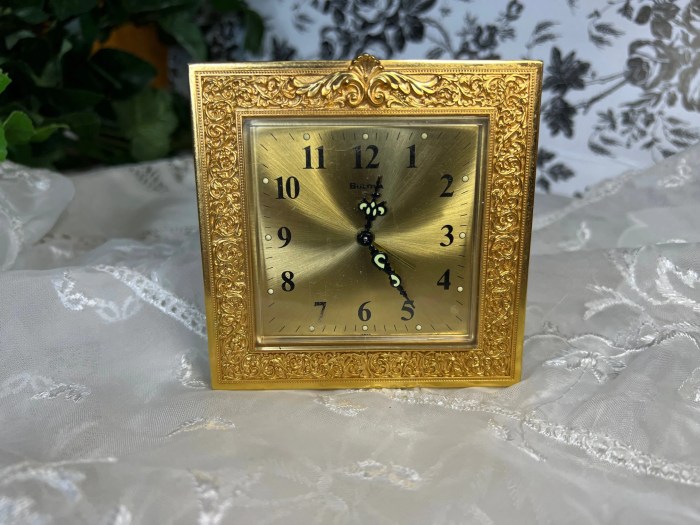
Bulova, a venerable name in horology, competes in a market brimming with established and emerging brands. Understanding Bulova’s position requires a comparative analysis of its design, features, and pricing against its rivals. This analysis will illuminate Bulova’s strengths and weaknesses in the contemporary market, while highlighting its unique selling propositions.Bulova’s enduring appeal rests on a blend of traditional craftsmanship and modern design sensibilities.
The brand seeks to balance its heritage with contemporary aesthetics, positioning itself as a viable option for consumers seeking a well-made timepiece. This strategy is crucial for Bulova to maintain relevance and competitiveness in a market where consumer preferences are constantly evolving.
Comparison with Competitors
Bulova clocks are often positioned as a mid-range option, offering a blend of quality and style. Their prices generally fall between those of more budget-friendly brands and high-end luxury timepieces. This positioning strategy allows Bulova to target a broad consumer base.
| Feature | Bulova | Competitor A (e.g., Timex) | Competitor B (e.g., Seiko) |
|---|---|---|---|
| Design | Often combines classic styling with modern elements; frequently featuring intricate details. | Typically more minimalist or utilitarian, emphasizing affordability and practicality. | May offer a broader range of styles, including both modern and traditional, sometimes incorporating Japanese aesthetics. |
| Features | May include features such as automatic movements (in some models), multiple time zones, and chronograph functions. | Usually features simple functionalities, focusing on reliability and ease of use. | Often incorporate advanced technologies like quartz movements, precise timing mechanisms, and sophisticated designs. |
| Pricing | Generally positioned in the mid-range price bracket. | Typically more affordable, emphasizing budget-friendliness. | May be priced higher due to intricate mechanisms and higher-quality materials. |
Unique Selling Propositions
Bulova’s unique selling propositions revolve around its heritage and design. The brand’s history in watchmaking provides a compelling narrative for consumers seeking quality and craftsmanship. Bulova leverages its established reputation to differentiate itself from competitors.
- Historical Significance: Bulova’s long history in horology and its association with significant events in American history provide a unique selling proposition.
- Design Variety: Bulova’s designs cater to a range of tastes, offering a blend of classic and modern styles, appealing to a broad customer base.
- Quality Materials: Bulova utilizes high-quality materials in some models, offering a superior experience compared to some competitors, particularly in its higher-end lines.
Key Differentiators
Bulova’s key differentiators include its blend of traditional and modern aesthetics. This balanced approach sets it apart from competitors that may lean heavily on one or the other extreme.
Bulova Clocks
Bulova, a venerable name in horology, has consistently evolved its designs to remain relevant in the ever-changing landscape of consumer preferences. The brand’s rich history is interwoven with technological advancements and design trends, resulting in a collection of timepieces that resonate with both traditionalists and modern enthusiasts. From classic designs to contemporary interpretations, Bulova’s adaptability speaks to its enduring appeal.Bulova has successfully navigated the transition from traditional designs to contemporary aesthetics, maintaining a strong brand identity while embracing modern trends.
This adaptability is evident in their contemporary collections, showcasing innovative features and a renewed emphasis on design elements. Their commitment to quality craftsmanship and attention to detail are apparent in their contemporary offerings, demonstrating a dedication to both heritage and innovation.
Modern Interpretations of Bulova Clocks
Bulova’s modern designs incorporate contemporary aesthetics while respecting the brand’s heritage. This approach blends classic watchmaking techniques with modern materials and shapes. The brand has effectively incorporated contemporary design elements, including sleek lines, bold colors, and unique materials, into their timepieces. This evolution allows Bulova to attract a broader audience while maintaining its recognizable identity.
Contemporary Bulova Clock Designs and Features
Bulova offers a range of contemporary clock designs, each with distinct features and styles. Some feature minimalist designs with clean lines and subtle accents, while others incorporate bolder shapes and patterns. Materials like stainless steel, brushed gold, and rose gold are frequently used, adding a touch of sophistication. Furthermore, many models incorporate automatic or quartz movements for precise timekeeping, alongside unique dials with intricate patterns and finishes.
The designs emphasize functionality and aesthetic appeal, demonstrating Bulova’s understanding of modern sensibilities.
Evolution of Bulova Clock Designs
| Era | Design Characteristics |
|---|---|
| 1950s – 1970s | Characterized by a strong emphasis on precision and functionality. Designs often featured intricate dials, bold numerals, and substantial cases. |
| 1980s – 2000s | The designs began to incorporate more modern features, including smaller sizes and sleek profiles. Materials like stainless steel and polished surfaces were prevalent. |
| 2010s – Present | Bulova clocks emphasize contemporary aesthetics, with clean lines, bold colors, and unique materials. The brand seamlessly integrates modern technology with traditional watchmaking skills. |
Innovative Features in Modern Bulova Clocks
Modern Bulova clocks often incorporate innovative features to enhance functionality and user experience. This includes incorporating advanced movement mechanisms, such as quartz or automatic movements, which provide accurate and reliable timekeeping. Furthermore, modern designs frequently include luminous hands and markers for improved readability in low-light conditions. Some models even feature digital displays for added convenience, alongside traditional analog time displays.
Bulova’s Approach to Sustainability in Modern Clock Designs
Bulova demonstrates a commitment to sustainability in its modern clock designs by utilizing recycled materials whenever possible. The brand prioritizes environmentally friendly manufacturing processes, which includes selecting materials with a lower environmental impact. Bulova’s approach to sustainability aligns with growing consumer awareness and demand for eco-conscious products.
Bulova Clocks
Bulova, a name synonymous with precision and American craftsmanship, has a rich history in the horological world. From its early days as a purveyor of high-quality timepieces to its evolution into a broader consumer brand, Bulova’s marketing strategies have played a crucial role in shaping its public image and market position. The company’s approach to advertising and promotion has adapted to changing consumer preferences and technological advancements.Bulova’s marketing efforts have consistently sought to position its clocks as more than just functional instruments.
The brand has emphasized quality, style, and sometimes, a connection to American ingenuity and history, appealing to a wide spectrum of consumers. This approach has allowed Bulova to maintain a presence in the market for decades.
Historical Marketing Campaigns
Bulova’s historical marketing campaigns frequently emphasized the precision and craftsmanship of their clocks. Early advertisements often featured detailed close-ups of intricate clock movements, showcasing the intricate engineering and precision of the timepieces. These campaigns sought to convey the idea that a Bulova clock was not just a timekeeper, but a statement of quality and sophistication.
Visual Language and Messaging
Bulova advertisements consistently employed a visual language that conveyed a sense of elegance and sophistication. Images frequently depicted the clocks in elegant settings, such as luxurious homes or offices, associating the product with prestige and success. The messaging often highlighted the enduring quality and reliability of Bulova timepieces, emphasizing their suitability for both everyday use and special occasions.
Color palettes in advertisements were often muted tones or rich colors that matched the intended image of the product.
Visual Representation of a Bulova Clock Advertisement
Imagine a full-page advertisement in a high-end magazine. The central focus is a Bulova Accutron, a sleek, modern-looking wristwatch. The watch’s hands are poised at precisely 10:10. The background is a soft, muted gray, creating a sense of understated elegance. A subtle light source highlights the intricate details of the watch face.
A small, elegant font, characteristic of the time period, states the model name, and the price. A tagline, such as “Precision in Every Second,” or “The Bulova Standard of Excellence,” is placed below the watch. The overall impression is one of sophistication, precision, and understated luxury.
Celebrity Endorsements
Bulova has occasionally leveraged celebrity endorsements to bolster its brand image. The specific celebrities chosen often reflected the desired image for the product, aiming to align the product with a particular demographic. These endorsements were intended to add an aura of prestige and desirability to the brand, appealing to the consumer base of those who admired or followed the endorsed figure.
Evolution of Brand Identity in Marketing Campaigns
Bulova’s brand identity has evolved over time, reflecting changing consumer preferences and market trends. Early campaigns focused heavily on the technical aspects of their clocks, emphasizing precision and quality. Later, the emphasis shifted towards a more sophisticated and stylish image, associating Bulova with a sense of prestige and luxury. The evolution of the brand’s visual language and messaging demonstrates an adaptability to maintain relevance and market position throughout different periods.
Bulova Clocks
Bulova, a name synonymous with precision and American craftsmanship, has left an indelible mark on the cultural landscape. From its early days as a purveyor of high-quality timekeeping devices to its prominent appearances in popular culture, Bulova clocks have played a significant role in shaping perceptions of time, design, and quality. Their enduring legacy reflects a rich history intertwined with American ingenuity and a dedication to excellence.Bulova’s impact extends beyond the realm of simple timekeeping.
Their designs have influenced other fields, and their presence in various cultural contexts speaks to their enduring appeal. Their ability to transcend mere functionality to become symbols of status, style, and even social commentary highlights the profound cultural significance of these timepieces.
Role in Shaping Perceptions of Time and Design
Bulova clocks, often featuring distinctive styles, have played a significant role in shaping perceptions of time. Their elegant designs and meticulous construction often conveyed a sense of sophistication and precision, aligning with the evolving aesthetic sensibilities of their respective eras. This was particularly true during the mid-20th century, when Bulova clocks were frequently associated with a certain level of prestige and quality.
The aesthetic evolution of Bulova clocks, ranging from Art Deco to more modern styles, mirrors the broader cultural shifts in design preferences.
Examples in Films, Television, and Other Cultural Contexts
Bulova clocks have frequently appeared in various forms of media. Their presence in films and television shows often served to underscore the importance of time or to add a touch of sophistication to a scene. For example, a vintage Bulova clock might appear in a period drama, adding authenticity and historical context to the setting. In other instances, the distinctive design of a Bulova clock might be used to evoke a particular mood or atmosphere.
This visibility in popular culture contributed to their broader cultural recognition and appeal.
Influence on Design Trends in Other Fields
The design principles and aesthetic sensibilities employed by Bulova clocks have, in turn, influenced other fields. Bulova’s commitment to precision and their use of innovative materials and designs, for example, inspired designers in fields like architecture and product design. The streamlined aesthetic and the emphasis on clean lines found in some Bulova models directly contributed to a broader trend towards minimalism and functional design.
Significant Role in Social or Cultural History
Bulova clocks’ presence in significant historical moments, from the post-war era to the 1960s, further cements their place in cultural history. Their role as status symbols during specific periods demonstrates how the timepieces could be associated with social standing and economic prosperity. This association highlights how Bulova clocks were more than just instruments for telling time; they were often symbolic of a particular era and its values.
For example, a Bulova Accutron, with its innovative technology, signified a leap forward in timekeeping.
Impact on Perception of Quality and Craftsmanship
Bulova clocks, renowned for their quality and craftsmanship, consistently cultivated an image of reliability and precision. This reputation was established through their commitment to meticulous manufacturing processes, and use of high-quality materials. This focus on quality extended beyond the immediate visual appeal of the timepiece; it translated into a perceived value proposition. Their association with quality and craftsmanship influenced the public perception of American-made products, reflecting the broader cultural emphasis on precision and reliability.
Conclusion
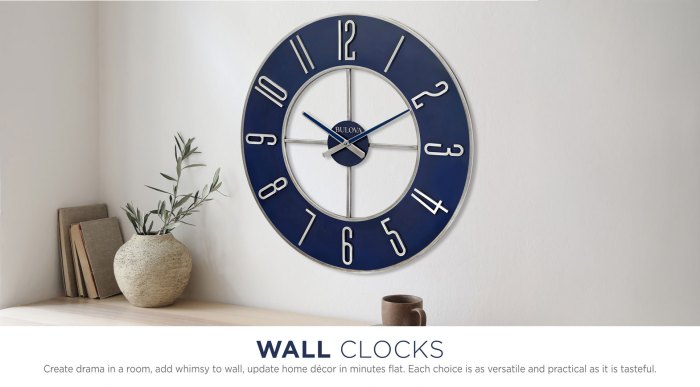
Bulova clocks have proven their enduring appeal by adapting to evolving tastes while remaining true to their legacy of quality craftsmanship. From vintage models to contemporary designs, the brand’s story reflects a commitment to innovation and timelessness. The exploration of their history, design elements, and market position highlights the enduring power of a well-crafted timepiece.
